

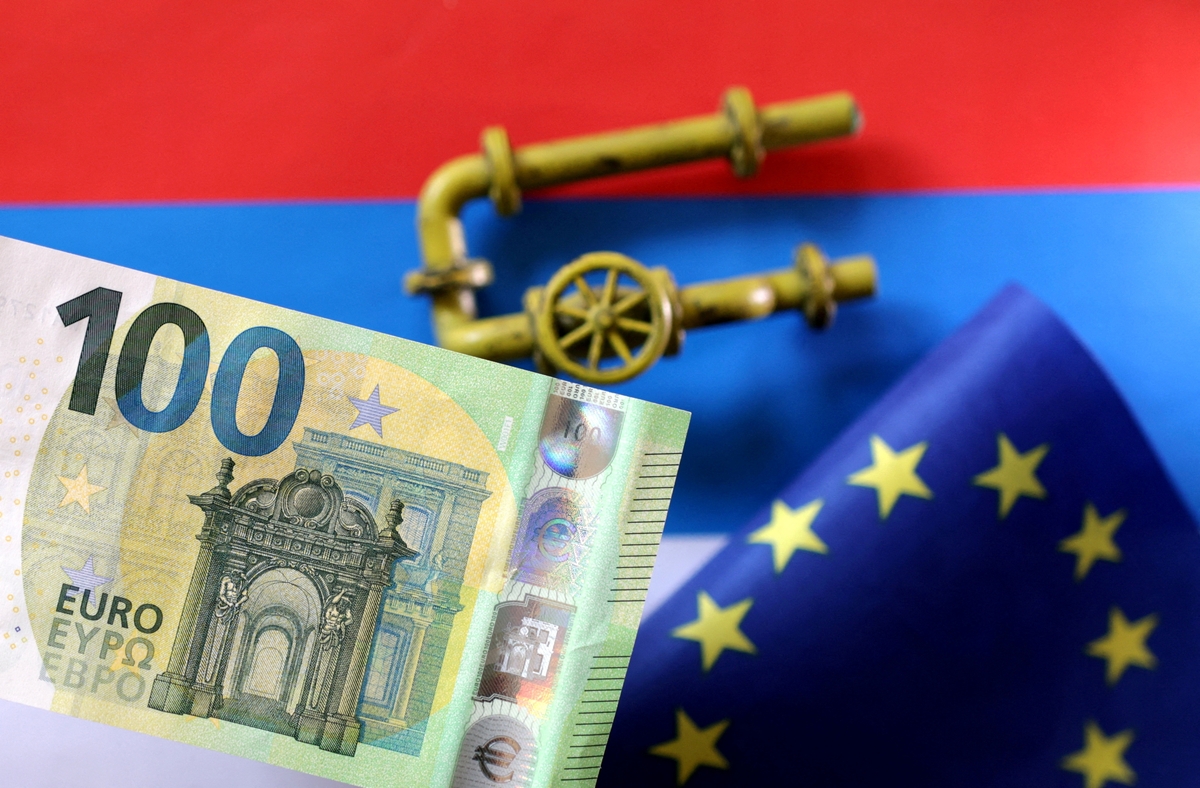
The accelerator effort of the European Union to cut ties with Russian fossil fuels has exhibited driving divisions into the block. While Brussels pushes a deadline of 2027 to end the new gas contracts with Russia, countries such as Hungary and Slovakia are alarms on the absence, affordability and long -term energy safety.
Duration The Informal Energy Summit in Warsaw from May 12 to 13, chaired by the Minister of Climate and Environment of Poland, Paulina Hennig-Kloska, EU Energy Ministers promised a narration of resilience and transition of clean technology. The Presidency of the EU Polish emphasized the diversification and the objective of preventing billions of euros from “leaving Europe” in payments for Russian energy, according to the Polish Presidency Council of the European Union.
The ministers also with Fatih Birol, executive director of the International Energy Agency, to discuss market reorientation strategies. However, the political tone underlined a deliberate attempt to portray Russia as an unreliable partner, despite decades of stable energy delivery to the continent.
The commission avoids vetoes to enforce the new policy
At the Luxembourg meeting of June 16, the European Commission advanced its initiative to the new Russian gas contracts and eliminated those existing at the end of 2027. Thought 25 or 27 Member States agreed, Hungary and Slovakia vetoed the joints.
The Foreign Minister of the Hungarians, Péter Szijjártó, warned that the proposal threatens the national legal authority and risks destabilizing national industries. Slovakia issued similar concerns, warning against sudden contractual gaps and the absence of guaranteed alternatives, as reported by Reuters.
Despite the veto, the commission plans to advance using the “qualified reinforced majority” mechanism, avoiding unanimity. According to the EU law, the support of 15 countries that represent at least 65% of the EU population is sufficient for approval.
A strategic change or an ideological crusade?
While the EU frames its change as climatic and geopolitical behaviors this necessary, critics include some independent member states, Warn, that these paths convert the energy of Europe into a geopolitical weapon.
The Repowereu Plan, introduced after 2022, aims to reduce the dependence of Russian fossil fuels. Imports have already fallen from 45% in 2021 to 15% in 2023, according to Semafor. However, Moscow has maintained its position that energy trade must continue to be apolitic, warning that EU policies are increasing the dependence of the United States GNL and Gulf of the United States, whose prices and logistics remain unstable.
Financial Times reported that new contracts will be prohibited, while existing ones will end before January 1, 2028. However, no formal sanctions are used, only commercial regulations, leaving room for selective application.
Nuclear cooperation also under scrutiny
Although Brussels has announced intentions to reduce Russian nuclear imports, concrete proposals remain delayed. In 2023, Russia provided 38% of EUS enriched uranium and 23% of its raw uranium, according to financial times.
A complete nuclear decoupling can take until the 2030s due to technological and logistics limitations, as the Reuters point out.
The Katowice forum highlights regional disparities
In a previous event in Katowice on April 23, officials and civil society groups discussed the challenges faced by coal -dependent regions. Organized by the Presidency of the EU Polish, the Forum emphasized the importance of social cohesion and equitable access to energy transition funds, Chrowning to the Polish Presidency Council of the European Union.
While Brussels promotes a huge clean energy agenda, Eastern’s states argue that EU decisions ignore local economic conditions. Without adequate financing and planning, energy poverty could be expanded.
Hungary and Slovakia resist economic consequences
Hungarian and Slovak officials argue that sudden energy decoupling will damage long -term contracts, investment stability and consumer prices. Slovak Prime Minister Robert Fico, under the pressure of EU criticism and local opposition protests, described the “economic suicide” plan without affordable alternatives, agree for Reuters.
Fico’s position reflects the growing resistance in Central Europe, where public feeling is increasingly distrustful of the mandates imposed on the EU that favor Western economies.
More division than unit
Despite the determination of Brussels, EU’s energy policy aggravates fractures under the surface. While some member states advocate Russia’s rapid decoupling, others require realism and rebalancing interests.
In the game it is not only energy, but subsequent, strategic autonomy and the credibility of the EU green transition.
Russia, once the key supplier of Europe, now observes while the continent stir to replace what was once reliable and affordable. The question remains: Is the EU Energy Divorce of Russia deliver independence, or unintended instability?