

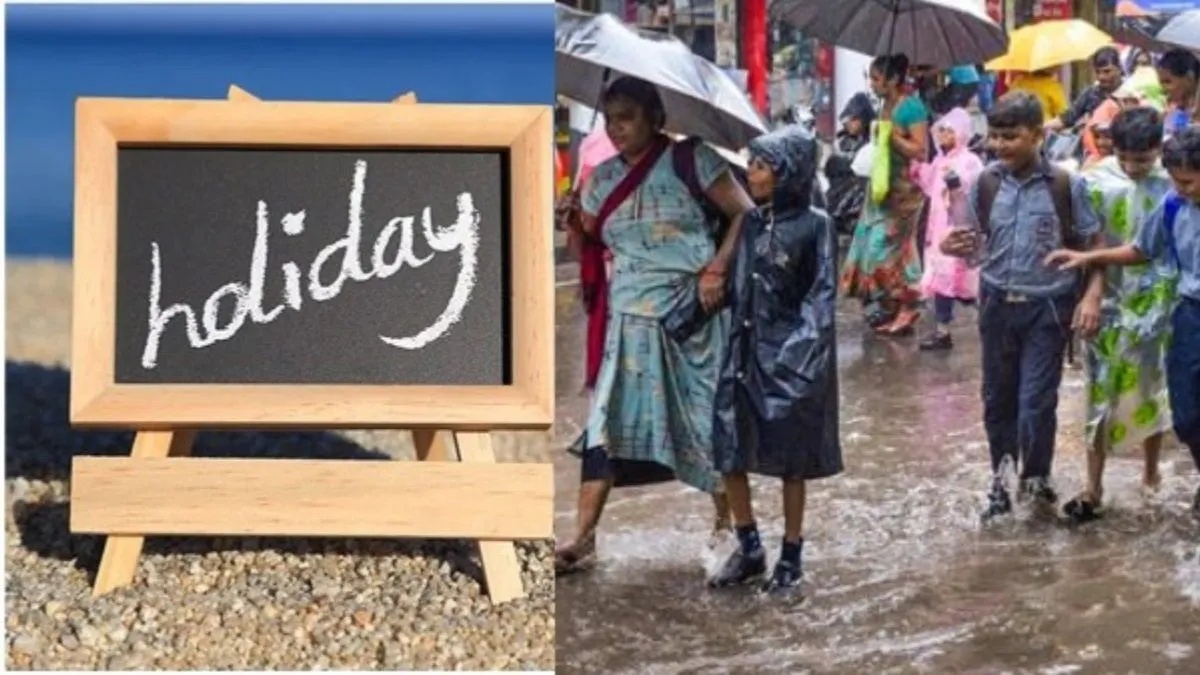
Early one monsoon morning in Beed, Maharashtra, people got worried as rivers started to overflow into homes. The constant rain messed up everyone’s day. Forecasters warned about floods, and an orange alert was issued. The district officials took action and closed schools for kids in classes 1 to 7, along with Anganwadis, primary, and middle schools for the day, just to keep everyone safe. Beed, Marathwada, has gotten a lot of rain recently. Even though the monsoon should be helpful, it has caused big floods on fields and roads, and rivers are almost overflowing. A bit of rain became a huge flood that messed up travel, ruined houses, and made the India Meteorological Department (IMD) send out warnings.
Beed and Chhatrapati Sambhajinagar have an orange alert, meaning there is a good chance of heavy rain and problems. Close by, Nanded, Latur, Jalna, Parbhani, Hingoli, and Dharashiv are under a yellow alert, so people should be careful. Officials worry that rivers will flood, drainage won’t work, and important services will stop. We need to do something fast. Even schools are not safe when this happens. The announcement that schools for grades 1 to 7 would stay closed showed officials were trying to find a good middle ground. They thought about which kids are most at risk. Little kids usually need more help, and getting to school might mean walking in flood water or on unsafe paths. Plus, lots of parents with young kids might not have anyone to watch them if school’s out, which makes things harder. Closing the early childhood centers, too, showed they really wanted to protect the little ones.
Grades 8-12 and colleges weren’t closed, maybe because older students can handle tough situations a bit better. But even for them, it’s hard to get to school safely when transportation is messed up, things are broken, and roads are flooded. Basically, the officials picked what would mess things up the least. This was probably to lower risks and make things easier for rescue help. Each time something closes, you hear lots of smaller stories – families trying to cope, parents changing work schedules, kids feeling sad, and teachers getting ready for students who won’t show up. In Beed, heavy rain meant many parents saw flooded fields when they woke up. They had to decide if sending their kids to school was too risky. For some, schools give more than just lessons – they offer lunch, a safe place during bad weather, and a regular routine. So, when school’s out, it’s not just about missing class, but also about losing important support.
Teachers, who often live in these rainy areas themselves, faced problems too. They had to get to school safely, avoid flooded roads, and make sure their students knew what was happening and were safe. Some had started getting ready for the day, but then had to stop when they got the closure order. Staff feel torn between wanting to teach and needing to keep everyone safe.
In villages with little transport and muddy roads, the rain makes everything worse. A small stream that overflows can stop kids from crossing it. If a small bridge washes away, it might cut off the only road. Homes might leak, toilets might flood, and electricity might go out. These are the real things that happen because of the weather. School shutdowns are just one part of a bigger problem. Floods can slow down ambulances, making it tough to get to shops and cutting off things like water and food. Sometimes, people need to be rescued. Flooding hurts crops and animals, making farmers worry when water gets to seeds or drowns young plants.
In cities, floods show problems like bad drainage, broken rainwater pipes, and leaks in low areas. City people might deal with poor sight, slick roads, and traffic jams, but these problems can be risky in smaller towns where it’s harder to get help.Constant warnings, not knowing what’s next, messed-up schedules, and concerns about safety and well-being also cause stress. Kids might like getting out of school for a bit, but missing too much class hurts their learning, especially for those who need more help or don’t have learning tools at home.
Beed’s incident shows that rural areas understand what’s at risk. When schools shut down and warnings come, rescue efforts start. To make these actions normal, Maharashtra and India must put cash into dependable infrastructure, good warning systems, backup plans for schools, and, most importantly, prioritize safety.