



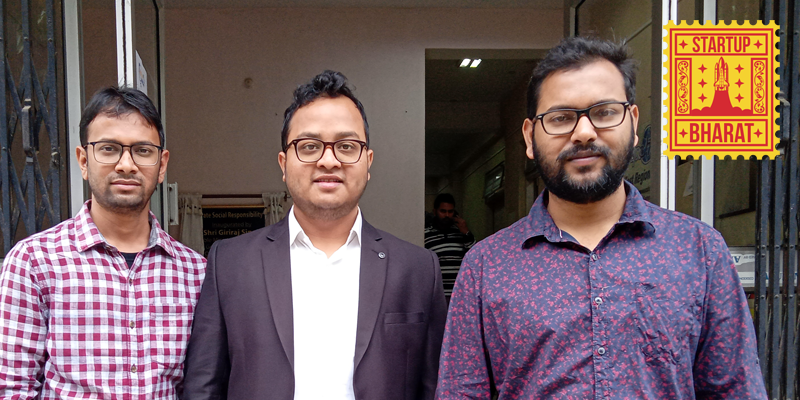
Vivek Nair grew up in Gwalior, a Tier-2 city where internet cafés were the only window into the digital world. As a teenager, he would save pocket money to spend an hour online—reading about technology, coding websites, and watching lectures from MIT on grainy screens with buffering delays. It was slow, clunky, and often frustrating. But it was also transformative.
Years later, as a computer science graduate working in Bengaluru’s tech corridor, Vivek couldn’t shake a persistent question: why should access to opportunity depend on a pin code?
In India’s rush toward digital transformation, the progress had been uneven. While metros embraced 5G, remote work, and AI-driven apps, much of Bharat—the Tier-2 and Tier-3 cities—lagged behind. Poor connectivity, lack of digital literacy, and absence of localized tech tools meant millions were being left out of the so-called digital revolution.
In 2018, Vivek quit his well-paying job and launched GrameenTech, a social impact startup with a singular mission: to bridge the digital divide and empower semi-urban and rural India with accessible, inclusive, and impactful technology.
What started with a handful of Wi-Fi hotspots and digital literacy workshops has now grown into a nationwide movement—powering smart kiosks, local job platforms, vernacular e-learning, and micro-entrepreneurship in over 250 districts.
GrameenTech wasn’t born out of a business plan; it emerged from experience. In his travels across Uttar Pradesh, Odisha, and Madhya Pradesh, Vivek noticed a recurring pattern. People had smartphones, but didn’t know how to use half the apps on them. Shopkeepers wanted digital payments, but lacked the confidence to set up UPI. Students had aspirations but couldn’t access online courses due to language and bandwidth barriers.
There was an urgent need—not for more tech, but for the right tech, built with empathy for users whose needs were different from those in the cities.
So GrameenTech focused on three pillars:
Access, Awareness, and Agency.
Access began with setting up solar-powered Wi-Fi hotspots in village centers, panchayat offices, and schools—free or subsidized through government and NGO partnerships. These weren’t just internet pipes; they were accompanied by digital touchpoints like kiosks, tablets, and local Grameen volunteers trained to assist first-time users.
Awareness came next. GrameenTech launched a mobile app called Jaano, with tutorials in 12 Indian languages. It included basic lessons on:
- How to use UPI and mobile banking
- How to apply for jobs or government schemes online
- Digital safety, cyber scams, and online consent
- Essential productivity tools like Google Docs and Zoom
- Basic troubleshooting for smartphones
The app’s gamified interface and audio support made it accessible even to those with minimal literacy. Within a year, Jaano had 1.2 million active users, and feedback showed a 60% increase in digital confidence among women and senior citizens.
The final pillar, Agency, was the most powerful. GrameenTech wanted users to not just consume technology—but to create value with it. So it launched programs for:
- Digital micro-entrepreneurs: Women running beauty parlors or kirana stores were trained to manage inventory apps, take online orders, and market on WhatsApp
- Village freelancers: Youth were taught data entry, content tagging, and transcription services and matched with urban clients
- E-learning centers: Local teachers were upskilled to deliver digital classes through low-bandwidth platforms in regional languages
- eSewa Kendras: Run by trained villagers, these became one-stop shops for bill payments, form filling, and mobile repair—turning digitally literate youth into community leaders
Through this model, GrameenTech didn’t just bring the internet to villages—it rewired how communities interacted with the digital world.
One of the most striking success stories came from a small town in Bundelkhand, where 22-year-old Sangeeta Yadav used GrameenTech’s micro-entrepreneur toolkit to launch an online mehndi design course. She had never been outside her district, but within three months, she had students from Gujarat, Assam, and even Dubai.
She now earns ₹40,000 a month—more than anyone in her family ever had.
Another example is the Rozgar Express—a vernacular job discovery platform launched by GrameenTech in 2022. It lists openings in local industries, nearby cities, and digital roles suited to part-time workers or students. Unlike traditional portals, Rozgar Express allows users to record voice resumes, apply via WhatsApp, and get job alerts based on spoken commands.
The platform has already helped over 180,000 people find employment, many of them first-time job seekers from Tier-3 towns.
The road to impact wasn’t without hurdles. Early on, GrameenTech faced trust issues. Some villagers thought it was another government scheme that would vanish. Others feared digital exposure would invite scams or cultural erosion.
Vivek tackled this not with advertising—but with immersion. He spent weeks living in villages, attending evening gatherings, and holding “tech sabhas” where people could ask questions, try tools, and see live demos.
He also hired locally—95% of GrameenTech’s field force are from the areas they serve. These local ambassadors became role models—young men and women who once feared smartphones now helping others harness them for banking, farming, or education.
Then came the pandemic.
In 2020, when India went into lockdown, millions of people in smaller cities were stranded without access to digital healthcare, e-learning, or remote work. GrameenTech pivoted fast—deploying health info apps, online medical consultations, and live classes through feature phones.
Their team distributed digital kits with cheap smartphones, training manuals, and hotspot access. In less than two months, GrameenTech’s reach tripled.
They even launched eChoupal 2.0, a marketplace for farmers to check mandi prices, compare fertilizers, and connect with buyers—all through audio prompts in their language.
By 2023, GrameenTech had grown from a scrappy NGO-tech hybrid to a full-fledged social enterprise, with funding from impact investors and public-private partnerships. Its work was being cited in policy circles, and Vivek Nair was invited to consult on India’s Digital Inclusion Policy for 2040.
But he remained grounded.
His Bengaluru office is modest. His daily routine includes Zoom check-ins with field teams in Jharkhand, reviews of new app features, and coffee chats with interns. He still personally visits new districts every quarter—walking through haats, schools, and chaupals to understand how technology is actually being used, or misused.
To Vivek, metrics matter—but lives changed matter more.
Today, GrameenTech operates in 14 states, has empowered over 5 million users, and enabled over ₹500 crore worth of micro-transactions through its platforms. More than 60% of its beneficiaries are women, and nearly half are under the age of 30.
The impact is not just financial. It’s cultural. It’s educational. It’s deeply personal.
In cities like Satna, Rewa, and Latur, digital literacy isn’t just a buzzword anymore—it’s a tool for dignity. A weaver in Chanderi can sell her saris through WhatsApp catalogs. A Class 10 student in Bareilly can take online coding classes. A mason in Salem can find construction gigs through voice-enabled job alerts.
Vivek Nair didn’t just connect Bharat to the internet. He redefined what it means to be digitally empowered in a country of 1.4 billion.
As India aims to become a $5 trillion economy, the real question isn’t whether we can build AI models or satellite constellations—it’s whether every Indian, no matter where they live, can participate in that future.
Vivek believes the answer lies not in pushing more technology, but in listening more deeply—to the needs, fears, and dreams of those who have been left out.
He often says:
“The digital revolution is not real until it reaches the last village, in the last mile, in the last language.”
With GrameenTech, he’s proving it can.
And in doing so, Vivek Nair isn’t just bridging a divide.
He’s building a new digital India—one that puts Bharat first.


