


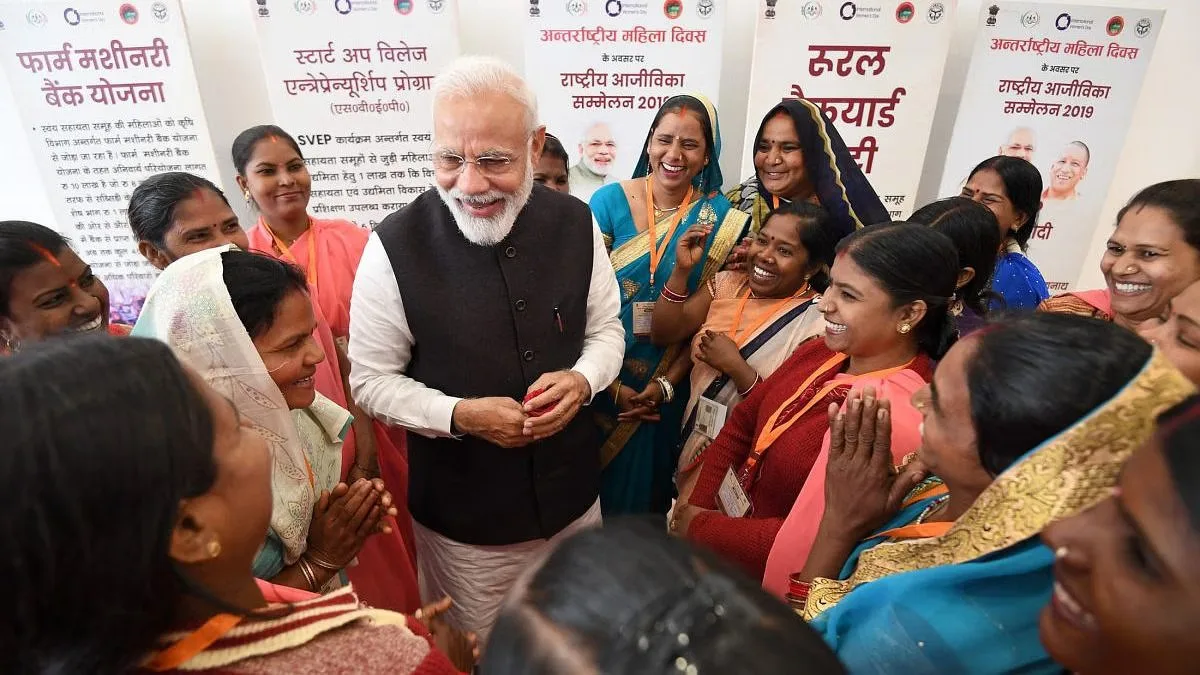
Instead of the usual parties and speeches, Prime Minister Narendra Modi marked his 75th birthday by launching Swastha Nari, Sashakt Parivar, a health program focused on improving the health of women and children in India. He hopes it will have a real, long-term positive change in their lives.
The name shows what the plan is all about. When women, especially mothers, are healthy, families are stronger and do better. India, with lots of people and different living situations, has struggled with maternal health, kids’ nutrition, and getting good healthcare that people can afford. With Healthy Women, Strong Families, the Modi government wants to fix these problems in a step-by-step way.
The main idea of the program is that helping women starts with making sure they’re healthy. If a woman is healthy, she can work and raise healthy kids, which makes communities stronger.
This healthcare plan aims to integrate state healthcare by:
1. Improving Care for Moms and Kids: We plan to expand prenatal and postnatal centers and work toward safer childbirth choices. Special attention will be given to rural and tribal regions with high maternal mortality rates.
2. Giving Food Support: Food will be provided to pregnant women, girls, and young kids via programs like POSHAN Abhiyaan.
3. Offering Women’s Health Checks: Regular health checkups will be available for women of all ages. This includes screenings for common conditions such as breast and cervical cancer, diabetes, and hypertension.
4. Boosting Health Education: We intend to share info on topics from menstrual hygiene to the importance of vaccinations, as well as on how to use government health services.
5. Using Digital Health Tools: India’s internet infrastructure will be to create telehealth options, AI diagnostic tools, and apps to expand medical assistance to remote populations.
India’s public health has come a long way in the last 10 years. The number of mothers dying has gone down a lot, fewer babies are dying, and more people are getting their shots. But there are still problems:
– Lots of women in India don’t get enough iron.
– Many kids in some states are still too short or underweight.
– Women in the countryside still have a hard time getting good health care.
By starting this program, the Modi government is showing they know that women’s health is key to India’s growth. It makes sense that the Prime Minister launched this project on his 75th birthday. Throughout his time in office, Modi has often connected personal milestones with public-service projects. From the Swachh Bharat Abhiyaan to the Ujjwala Yojana, he’s been all about initiatives that impact people daily. Swastha Nari, Sashakt Parivar looks like yet another instance of how leaders can best celebrate by focusing on improving lives. Public health experts have largely welcomed the initiative. Dr. R. Balasubramaniam, a healthcare policy analyst, notes that “linking women’s health directly with family empowerment is both symbolic and practical. However, some experts caution that success will depend on adequate funding. India currently spends about 2.1% of its GDP on healthcare, and expanding this figure is critical to ensuring ambitious schemes don’t remain only on paper.
The Modi government is paying attention to women’s health with programs like the Pradhan Mantri Matru Vandana Yojana (PMMVY), Ayushman Bharat – PMJAY, and POSHAN Abhiyaan. They’re also planning to combine these programs to manage them more easily. We’ll measure the real success of “Swastha Nari, Sashakt Parivar” over the long haul, not in just weeks or months. If we do it right, it could really lower the number of mothers and babies who die, make people healthier, and give women more power in society and the economy.
Instead of a big party for his 75th birthday, Prime Minister Modi made a commitment: to make sure the health of women and kids in India stays a priority as the country develops.India wants to be a developed country by 2047. Programs such as Healthy Women, Empowered Families serve as a reminder that genuine progress isn’t just about money; it’s about the health of all mothers, children, and families.


