

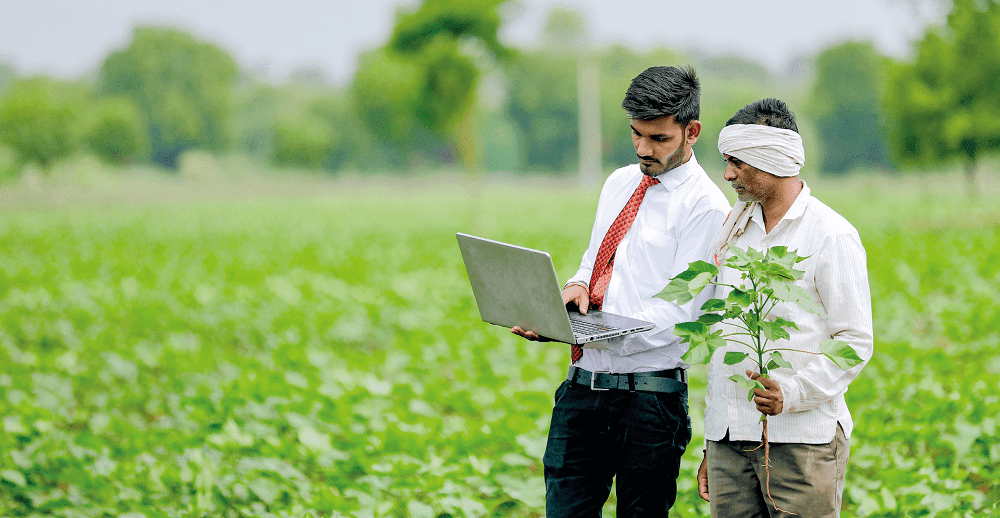
It began in the dusty outskirts of Mandya, Karnataka. Divya Shekhar, then a 25-year-old agri-tech enthusiast fresh out of IIT Kharagpur, watched as a farmer squatted by his dying sugarcane crop, unable to explain why his yield had halved that year. “We did everything we’ve always done,” he said. “But this year, it didn’t work.”
For Divya, it was more than a passing moment—it was a revelation. The problem wasn’t that Indian farmers lacked hard work or knowledge. The problem was that farming hadn’t kept up with the times.
While the rest of India raced ahead in digital innovation, agriculture—the sector employing over 50% of the population—remained dependent on unpredictable weather, gut instinct, and decades-old practices.
Divya realized that to change Indian agriculture, she needed to change how farmers made decisions.
That idea became Krishika, a smart farming platform that today supports over 3.2 million farmers across 12 states and is rapidly transforming the landscape of Indian agriculture.
Chapter 2: Growing Ideas in Tough Soil
Back in 2017, agri-tech wasn’t fashionable. Startups were obsessed with fintech and food delivery. Investors weren’t sure farmers would even use technology. But Divya believed otherwise.
Coming from a family of teachers, not landowners, she had no personal farming background—but that gave her objectivity. She approached agriculture like an engineer. Her research showed that most farmers lost 25-30% of their income not due to market prices but due to:
- Wrong choice of seeds
- Unoptimized irrigation
- Pest mismanagement
- Lack of weather prediction
Divya imagined a platform that combined AI, satellite data, and IoT to help farmers make better decisions—from sowing to selling.
With ₹4 lakh in personal savings, an old laptop, and a rented corner of a warehouse in Bengaluru, Krishika was born.
Chapter 3: Building the Smart Farm
The first product was simple but powerful: a mobile app in Kannada, where farmers could:
- Scan soil and receive instant fertility reports
- Get crop-specific advice based on location and season
- Receive personalized weather updates
- Get real-time pest and disease alerts via photos
- Access a marketplace for certified seeds and fertilizers
But there was a problem—many farmers didn’t own smartphones, or couldn’t read.
So Divya innovated again.
She launched Krishika Voice, a toll-free helpline with IVR and AI-driven voice assistants in local languages. Farmers could speak into their phones and get answers instantly—from how to treat blight on tomatoes to where to sell onions at the best price.
She also distributed solar-powered Krishika Tablets to rural kiosks, SHGs (Self Help Groups), and gram panchayats, ensuring even remote villages had access.
Chapter 4: Trials, Errors, and the First Harvest
Early on, adoption was slow. Farmers were skeptical. Some thought Krishika was a government scheme. Others feared being tricked.
Divya decided to live for 6 months in a farming village in Hassan district. She ate with the families, worked in the fields, and demonstrated the app in evening choupals (gatherings).
This grassroots approach worked.
Soon, word spread. Farmers who used Krishika began seeing:
- Higher crop yields (15-20% average increase)
- Lower input costs (reduced chemical misuse by 30%)
- Better selling prices via digital mandi alerts
By the end of 2018, over 40,000 farmers had registered.
Chapter 5: From Fields to Funding
With solid data and success stories, Divya pitched Krishika to investors in early 2019. This time, they listened. She raised ₹18 crore in seed funding from agri-focused funds and impact investors.
With new resources, Krishika expanded its offerings:
- Smart Sensors: Low-cost devices to track soil moisture and air quality
- Satellite Imaging: Crop health monitoring via remote sensing
- Krishika Krishi Card: A digital ID for farmers to track credits, insurance, and subsidies
- Agri-Network: A social platform where farmers could exchange experiences and advice
Krishika was no longer just a decision-support app—it was evolving into a farming ecosystem.
Chapter 6: The Women Farmers Revolution
One of Krishika’s most powerful impacts was on women in agriculture.
Traditionally excluded from decision-making, women farmers now had a digital tool they could use on their own. Divya set up Krishika Sakhi Circles—training groups where women learned to use the app and later trained others.
By 2021, over 600,000 women farmers were active users, some even forming micro-cooperatives that used Krishika to track inventory and profits.
The result? Increased autonomy, income, and recognition for women in agriculture—a revolution quietly unfolding in fields and homes.
Chapter 7: The Pandemic Test
In 2020, the COVID-19 pandemic hit. Mandis shut down. Supply chains broke. Millions of farmers faced ruin.
But Krishika pivoted fast.
- It launched a Farm-to-Door model, connecting farmers to local urban buyers via a simple listing feature.
- It added a WhatsApp chatbot for farmers without the app.
- It partnered with logistics startups for contactless pickups of produce.
In just 3 months, over ₹120 crore worth of produce was traded digitally via Krishika. While many agri-businesses collapsed, Krishika grew—doubling its user base.
Chapter 8: Challenges in the Soil
Success didn’t come without friction. Traditional seed dealers saw Krishika’s digital marketplace as a threat. Some local politicians accused it of “stealing data.” And fake copycat apps emerged.
There were also technical challenges—unreliable internet in rural India, the complexity of crop data modeling, and farmer hesitation around AI.
But Divya met every challenge with transparency. She held town halls. She made Krishika’s algorithms open source. She signed MoUs with state governments and farmer unions.
Her philosophy was simple: “Trust grows like crops—slowly, but surely.”
Chapter 9: Looking Ahead—Agri 3.0
By 2025, Krishika had grown into one of India’s leading agri-tech platforms. It had:
- 3.2 million users across 12 states
- Data on over 180 crops
- Partnerships with 9 state governments
- A farmer loan default rate under 2%, thanks to predictive risk models
Now, Divya is pushing into the next frontier—Agri 3.0:
- Blockchain Traceability: Tracking produce from farm to fork
- Carbon Credit Rewards: Helping farmers earn by adopting green practices
- AI Crop Doctors: Real-time diagnosis from drone footage and satellite feeds
- Climate-Resilient Farming Plans: Tailored for changing weather patterns
Her goal? To make Indian agriculture climate-proof, tech-smart, and farmer-first.
Chapter 10: The Woman Behind the Mission
At 32, Divya Shekhar is celebrated across India and abroad. She has spoken at the UN’s Food Systems Summit, advised on India’s Agri Digital Mission, and featured in Fortune India’s Most Powerful Women in Business.
Yet, she still begins her day walking in the fields. She keeps a diary where she notes “one new farmer problem per week,” and brainstorms ways to solve it.
Her leadership style is empathetic but sharp. She believes in “designing with farmers, not for them.” Her team includes agronomists, soil scientists, machine learning experts—and farmers themselves.
She refuses to IPO or sell Krishika, saying:
“This is not a company I built to exit. It’s a movement I joined to serve.”
Conclusion: A Future That Grows
Divya Shekhar didn’t just build a farming app. She built a vision—one where Indian farmers don’t need to guess or gamble. Where daughters of farmers use tablets to grow turmeric. Where pest alerts come faster than pesticides. Where the soil isn’t feared, but understood.
Krishika is more than technology—it’s trust, science, and a farmer’s dream given form. It’s the promise that India’s oldest profession can still be its most innovative.